
Galle Fort, long a trading point for Sri Lankan gemstones

Reference

Sri Lankan Gemstones

Twelve stones the island is known for, what each one actually is, how they ended up under a paddy field in Ratnapura, and how to buy one without being cheated.

12 gemstonesRatnapura, city of gemsHow to buy safely

Start here

Why One Small Island Has So Many Gems

Sri Lanka produces an improbable share of the world's coloured stones for an island of its size, and the reason is geological rather than lucky.

Most of the island sits on the Highland Complex, a belt of Precambrian metamorphic rock more than 550 million years old. Heat and pressure cooked aluminium-rich rocks into corundum — the mineral that becomes sapphire and ruby — along with chrysoberyl, spinel, garnet and beryl, all within the same terrain.

Then rain did the sorting. Monsoon erosion broke those rocks down over millions of years and washed the hardest, densest minerals into river valleys, where they settled into gravel beds called illam. Gems survive that journey precisely because they are hard and chemically stubborn; almost everything else became sand.

So Sri Lankan gems are mined not from rock faces but from gravel, often several metres beneath land now planted with rice. Pits are dug by hand, a few metres across, shored with timber and pumped clear of groundwater as they go. The gravel is hauled up in baskets and washed in conical pans, and the stones are picked out by eye. It is a method that has barely changed in centuries, and it is why the industry is made of thousands of small operators rather than a handful of large mines.

One by one

The Twelve Stones Sri Lanka Is Known For

What each one is, why it looks the way it does, and the single thing worth checking before you buy.

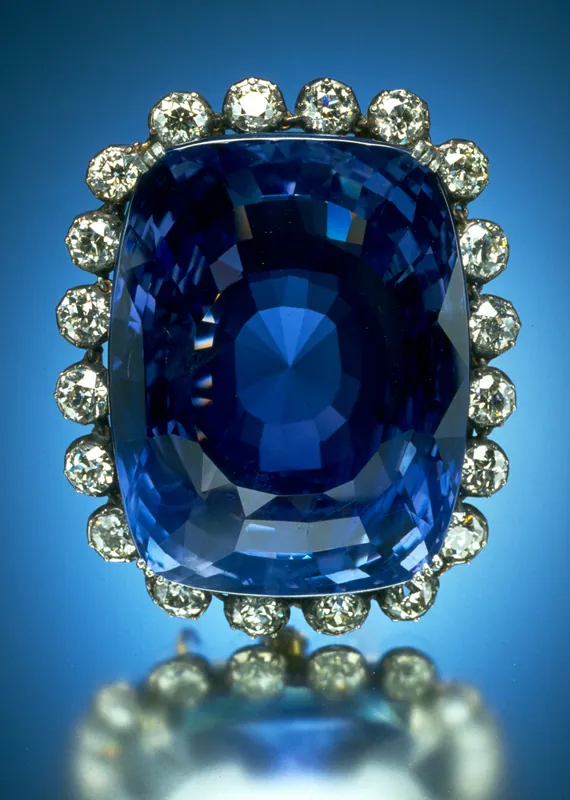
A large deep-blue faceted sapphire, the Logan Sapphire, in a diamond setting
Photo: Chip Clark, Smithsonian staff · Public domain · Wikimedia Commons

Blue sapphire

Corundum

Sri Lanka's national gem, and the stone the island's reputation was built on.

Ceylon blue sapphires are prized for a lighter, brighter blue than the inky stones from Myanmar or the overly dark material from Australia. The colour comes from traces of iron and titanium inside what is otherwise colourless aluminium oxide. The same mineral, corundum, produces ruby when chromium replaces those elements — the two are the same stone wearing different impurities.

Before you buy: Heat treatment is extremely common and is accepted in the trade when disclosed. Unheated stones of good colour command a substantial premium, which is exactly why a certificate stating the treatment matters more than the seller's word.
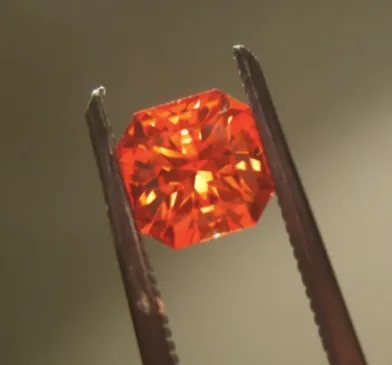
A padparadscha sapphire showing its characteristic pink-orange lotus colour
Photo: Alextryan · Public domain · Wikimedia Commons

Padparadscha

Corundum

The rarest sapphire of all, and one of the very few gems named after a flower.

The name comes from the Sinhalese for lotus blossom, and that is the colour: a pastel blend of pink and orange that sits between the two without settling on either. Sri Lanka is the classic source, and stones from here set the standard the rest of the world is measured against.

Before you buy: Where the boundary of 'padparadscha' falls is genuinely contested between laboratories, so the same stone can be certified differently by two labs. Expect to pay a large premium over an ordinary pink sapphire, and expect that premium to rest entirely on which report you are shown.

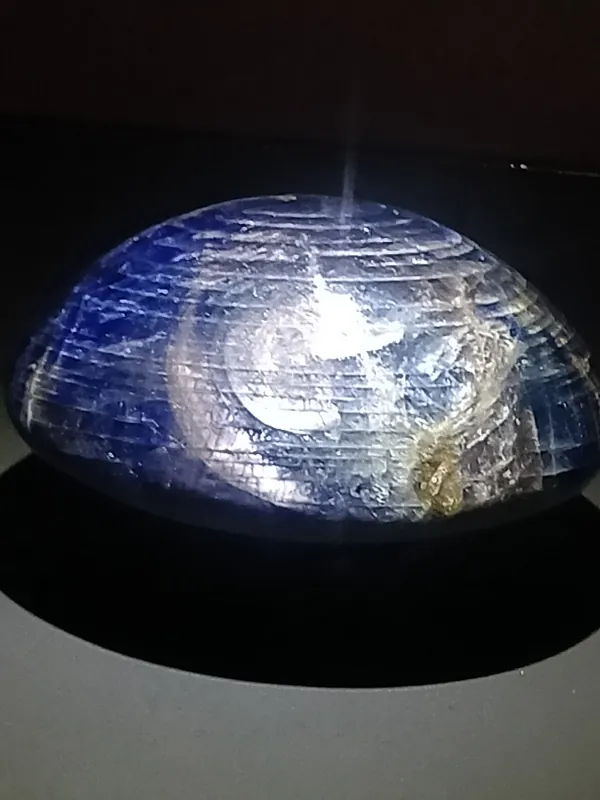
A large grey-blue star sapphire cabochon showing a six-rayed star
Photo: TheMaharlikan · CC0 · Wikimedia Commons

Star sapphire

Corundum

A sapphire with a six-rayed star that moves as the stone moves.

The star is not an inclusion to be apologised for but the point of the stone. Needle-like rutile inclusions arranged along the crystal's growth axes reflect light into a sharp six-rayed figure, an effect called asterism. It only shows when the stone is cut as a smooth dome rather than faceted, which is why star sapphires are always cabochons.

Before you buy: Judge the star, not the body colour: it should be centred, sharp, and should glide cleanly across the dome as you tilt it. A weak or lopsided star is the most common fault, and synthetic star sapphires with suspiciously perfect rays are widespread.

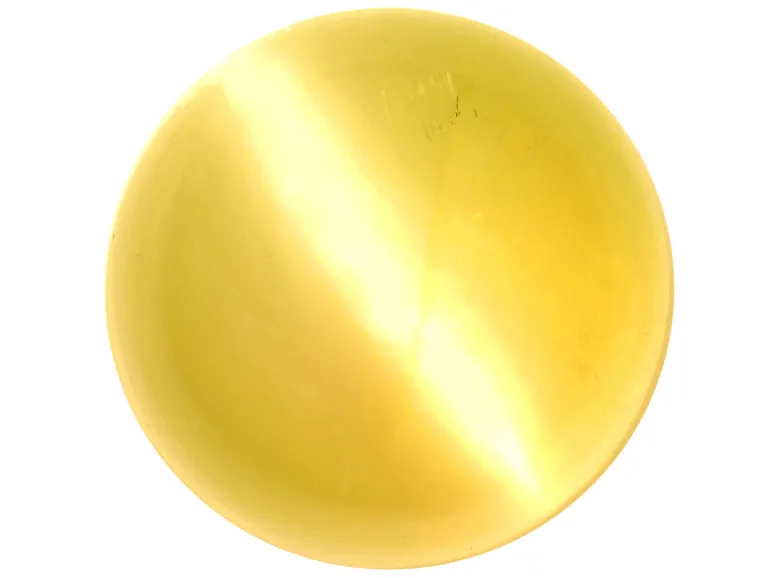
A honey-coloured cat's eye chrysoberyl cabochon with a sharp band of light across it
Photo: Gemshare · CC BY-SA 3.0 · Wikimedia Commons

Cat's eye chrysoberyl

Chrysoberyl

A single band of light that opens and closes across the stone like a pupil.

Properly called cymophane, this is the gem that defines chatoyancy — the effect every other 'cat's eye' stone is compared against. Parallel tubes or fibres inside the chrysoberyl reflect a single tight line of light across the dome. In a fine stone the line is razor sharp and the two halves of the gem differ in colour either side of it, an effect called the milk and honey.

Before you buy: Sri Lanka is the historic source for the best material. The eye should be bright, perfectly straight and dead centre, and it should snap open and shut as you rock the stone. If a seller says 'cat's eye' without naming the mineral, ask: quartz and tourmaline both do it far more cheaply.

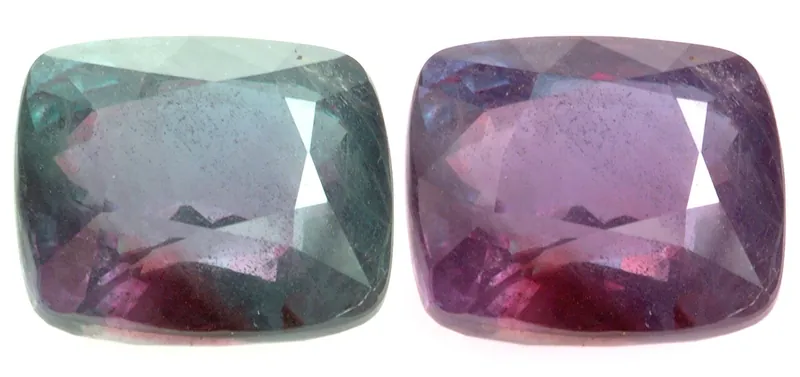
An alexandrite shown twice, green in daylight and red under incandescent light
Photo: Wikimedia Commons contributor · CC BY-SA 3.0 · Wikimedia Commons

Alexandrite

Chrysoberyl

Green by daylight, red under a lamp — the same stone, genuinely.

Alexandrite is chrysoberyl coloured by chromium, and it absorbs light in a way that leaves it balanced between two transmission windows. Daylight, rich in blue, pushes it green; incandescent light, rich in red, pushes it red. The change is a property of the stone rather than a trick of the setting, and a strong one is among the rarest things in the gem world.

Before you buy: Judge it on how complete the colour change is, not how pretty either colour is on its own. Much of what is sold as alexandrite is colour-change garnet or synthetic corundum, both of which shift between duller, muddier hues.

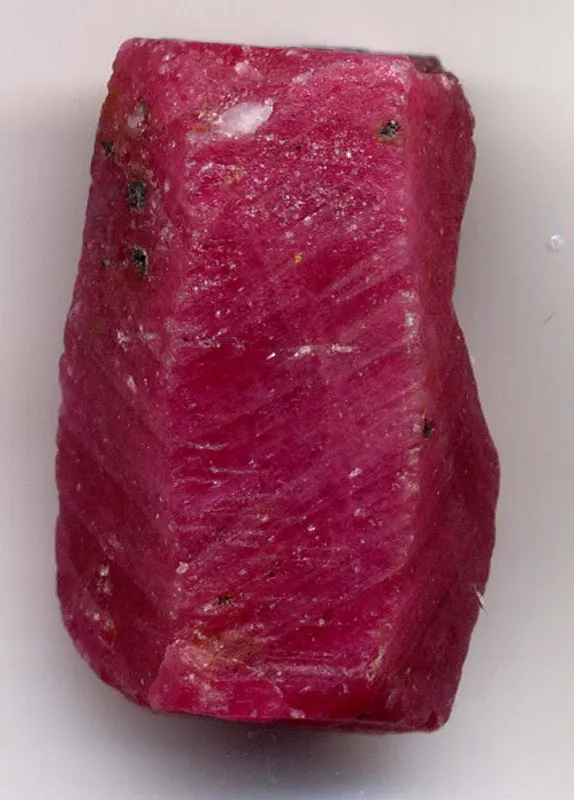
A red ruby crystal
Photo: Wikimedia Commons contributor · Public domain · Wikimedia Commons

Ruby

Corundum

Sapphire's twin, separated from it only by chromium.

Ruby is corundum that chromium has turned red, and the line between a ruby and a pink sapphire is a matter of trade convention rather than chemistry. Sri Lankan rubies tend toward lighter, pinkish reds rather than the deep 'pigeon's blood' associated with Myanmar, and they are considerably less common here than sapphire.

Before you buy: Colour drives the price far more than size. Be aware that lead-glass filling of badly fractured ruby is widespread across the trade and produces stones that look far better than they are, and that are fragile in ordinary wear.

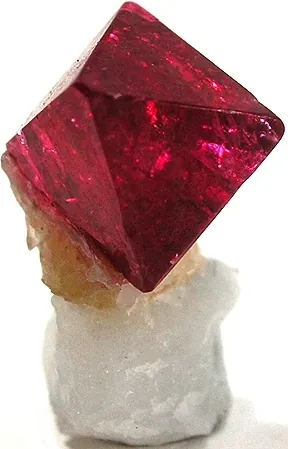
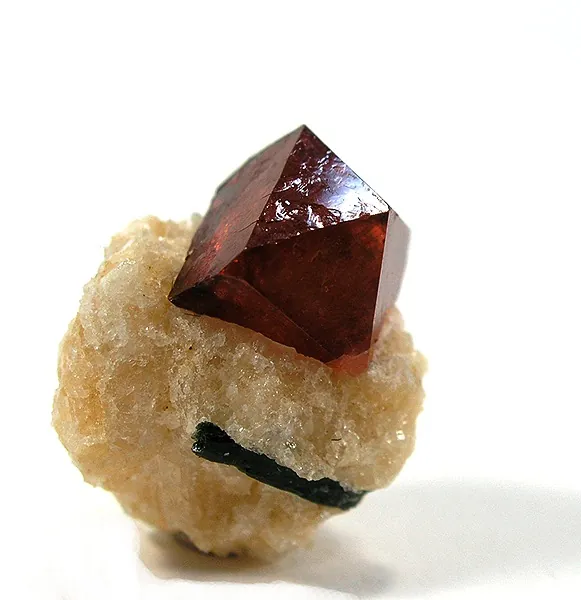
A red spinel crystal set in white calcite matrix
Photo: Robert M. Lavinsky · CC BY-SA 3.0 · Wikimedia Commons

Spinel

Spinel

For centuries mistaken for ruby, and now valued for what it actually is.

Several of the world's most famous 'rubies' turned out to be spinel once gemmology could tell them apart. It occurs in red, pink, a notable hot pink, and a cobalt blue that is among the most sought-after colours in the trade. Sri Lanka produces fine material across that range.

Before you buy: Spinel is almost never treated, which makes it unusual and is a large part of its appeal. That also means an untreated certificate is less of a bargaining point here than it is for sapphire — judge the stone on colour and clarity.

A moonstone showing blue adularescent sheen
Photo: Eric Polk · CC BY-SA 4.0 · Wikimedia Commons

Moonstone

Feldspar

The affordable one, and the one most visitors actually take home.

Moonstone's blue shimmer, called adularescence, comes from light scattering between microscopic layers of two feldspars that separated as the crystal cooled. Sri Lanka is the classic source for the finest blue material, mined chiefly around Meetiyagoda in the south-west.

Before you buy: The sheen should float across the surface and appear blue rather than milky white, and it should be visible from a normal viewing angle rather than only one narrow position. It is soft and cleaves easily, so it suits earrings and pendants better than a ring worn daily.

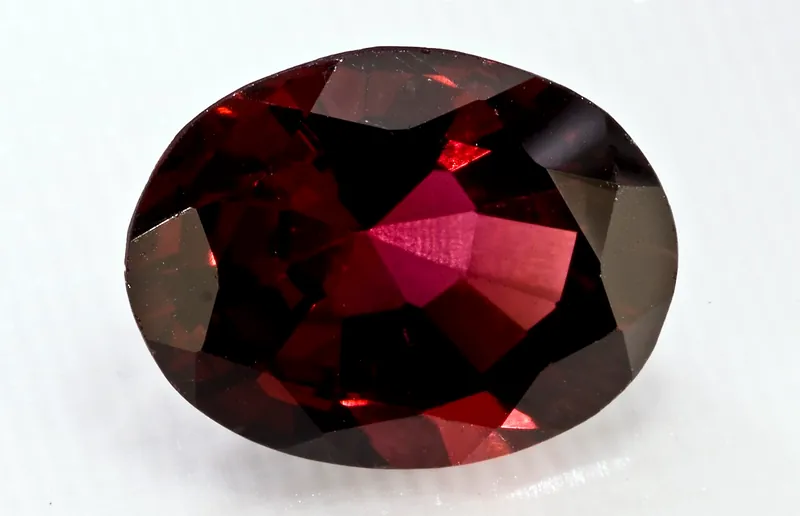
A deep red almandine garnet crystal
Photo: Didier Descouens · CC BY-SA 4.0 · Wikimedia Commons

Garnet

Garnet group

A whole family of minerals, not one stone.

Garnet is a group rather than a species, and the members span almost every colour. Sri Lanka yields almandine and rhodolite in reds and purplish pinks, and hessonite — the warm cinnamon-brown variety the trade knows well from here. Some Sri Lankan garnet also shows a colour change, which is where it gets confused with alexandrite.

Before you buy: Garnet is rarely treated and rarely faked, because it is not expensive enough to be worth either. That makes it one of the safer things to buy from a small seller.

A faceted pale topaz gemstone
Photo: Wela49 · CC BY-SA 3.0 · Wikimedia Commons

Topaz

Topaz

Usually colourless from the ground, and usually blue by the time you see it.

Natural topaz from Sri Lankan gravels is most often colourless or pale. The vivid blues filling shop windows across the island are almost always produced by irradiating and heating colourless material, a stable and entirely routine treatment.

Before you buy: Treated blue topaz is inexpensive and honest when described as such. Be wary of it sold at sapphire prices, and be sceptical of 'imperial topaz' claims, which refer to a pinkish-orange material associated with Brazil rather than here.

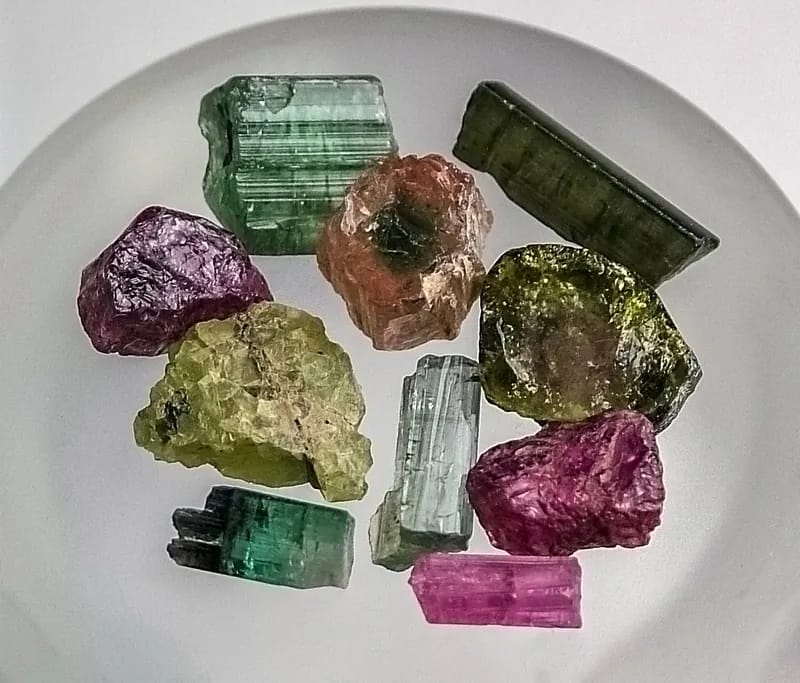
Several tourmaline crystals in different colours
Photo: W.carter · CC BY-SA 4.0 · Wikimedia Commons

Tourmaline

Tourmaline group

The gem that comes in more colours than any other.

Tourmaline's crystal structure accepts an unusual range of elements, and each one shifts the colour. Single crystals frequently grow in bands, producing stones that are green at one end and pink at the other. Sri Lankan material runs mostly to greens, browns and yellows rather than the electric blues of Brazil.

Before you buy: A bicolour crystal cut to show both colours cleanly is worth more than either colour alone. Tourmaline is commonly heated, which is routine and stable.

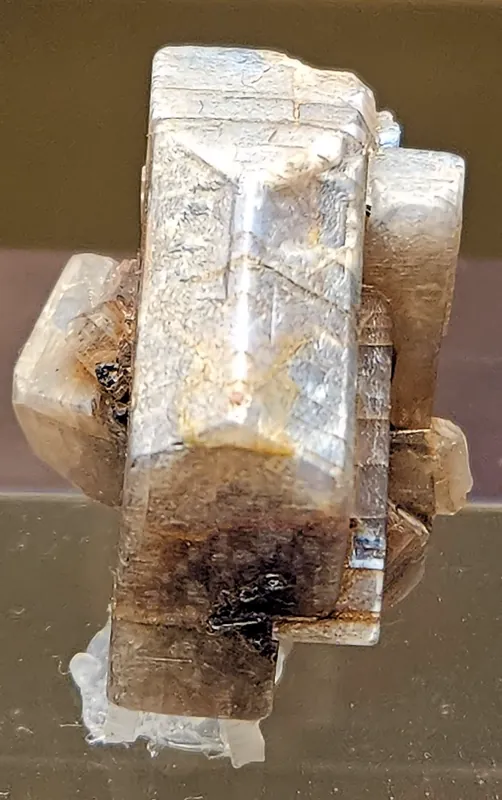
A zircon crystal on matrix
Photo: Robert M. Lavinsky · CC BY-SA 3.0 · Wikimedia Commons

Zircon

Zircon

A natural mineral with more fire than diamond, and nothing whatever to do with cubic zirconia.

Zircon is badly served by its name. It is a genuine mineral, among the oldest on Earth — individual crystals have been dated past four billion years — and it disperses light into spectral colours more strongly than diamond does. Sri Lanka is a classic source, particularly for the blue material produced by heating brown stones.

Before you buy: Do not confuse it with cubic zirconia, a synthetic diamond simulant with which it shares nothing but a syllable. Zircon is brittle at the edges, so it is better in a protective setting than an exposed one.

The part that matters

How to Buy a Gem Without Being Cheated

Sri Lanka has a long-established, properly regulated gem trade, and it also has a thriving industry built on separating visitors from their money. Telling them apart is not hard once you know what to ask.

Ask for the licence
Every legitimate dealer and exporter is licensed by the National Gem and Jewellery Authority, and will give you the licence number without hesitation. Reluctance at that question answers it.
Insist on an independent certificate
A report from an independent laboratory should state the species, the origin and — critically — any treatment. A certificate issued by the shop selling you the stone is a sales document, not an opinion.
Assume it has been treated
Most sapphire on the market is heated, and that is accepted practice when disclosed. 'Unheated' roughly doubles the conversation about price, which is exactly why it needs to be in writing from a lab rather than asserted across a counter.
Be sceptical of the mine visit
Genuine working pits exist around Ratnapura and are worth seeing. So do staged ones that end in a showroom, where the pressure to buy is the entire point of the trip.
Walk away from urgency
Unsolicited approaches, a deal that expires today, a stone that must be exported through a friend, or a price far below what the stone should cost — each one on its own is a reason to leave.
Clear the export properly
Gems leaving the country are meant to be cleared through the National Gem and Jewellery Authority. A receipt is not clearance. Ask the seller how they handle it before you hand over money, not after.

We do not sell gemstones, take commission from gem dealers, or build showroom stops into an itinerary unless you ask for one. If you want to see a working mine around Ratnapura or visit a licensed dealer, say so and we will arrange it — and if you would rather not be taken shopping at all, that is the default.

Asked often

Sri Lankan Gemstones: Common Questions

What gemstones is Sri Lanka famous for?

Blue sapphire above all, which is the national gem. Sri Lanka is also the classic source for padparadscha — the pink-orange sapphire named after the lotus — along with star sapphire, cat's eye chrysoberyl, alexandrite, spinel, moonstone, garnet, zircon, topaz and tourmaline.

Where are gems mined in Sri Lanka?

Mostly around Ratnapura, whose name means 'city of gems', in the south-west of the island. The stones are not dug from solid rock but washed out of gem-bearing gravel called illam, laid down in ancient riverbeds and now buried beneath paddy fields.

How do I avoid being cheated buying gems in Sri Lanka?

Buy from a dealer licensed by the National Gem and Jewellery Authority and ask for the licence number. Insist on a certificate from an independent laboratory stating species, origin and any treatment. Treat unsolicited offers, 'special export deals' and spontaneous mine visits as the warning signs they are.

Is it legal to take gemstones out of Sri Lanka?

Yes, but gems intended for export are meant to be cleared through the National Gem and Jewellery Authority. A shop receipt or a laboratory report is not the same thing as export clearance, so ask the seller how they handle it before you pay.

Are Sri Lankan sapphires heat treated?

Most of them, and that is normal and accepted across the trade as long as it is disclosed. Unheated stones of good colour carry a significant premium, which is precisely why the treatment needs to be on a certificate rather than taken on trust.

Where this comes from

Photograph Credits and Sources

The photographs on this page are not ours, and none of them are of stones we sell. Each comes from Wikimedia Commons under a licence that permits reuse, and each is credited beneath the image with its author, licence and a link to the original file. Several carry a CC BY-SA licence, where that credit is a condition of use rather than a courtesy.

Background on the island’s geology and gem trade draws on Gems of Sri Lanka and Ratnapura. Licensing and export requirements are those published by the National Gem and Jewellery Authority; confirm current rules before you travel, as they are revised from time to time.

Ratnapura sits within a comfortable drive of the south coast and the hill country. If you want it in your route, our tours can take you, and the driving times page will tell you what adding it costs in hours.

CeilonTravels

Curious about Ratnapura?

See Where the Gems Come From

We can build a working mine visit and a licensed dealer into a route, or leave the shopping out entirely. Tell us which.